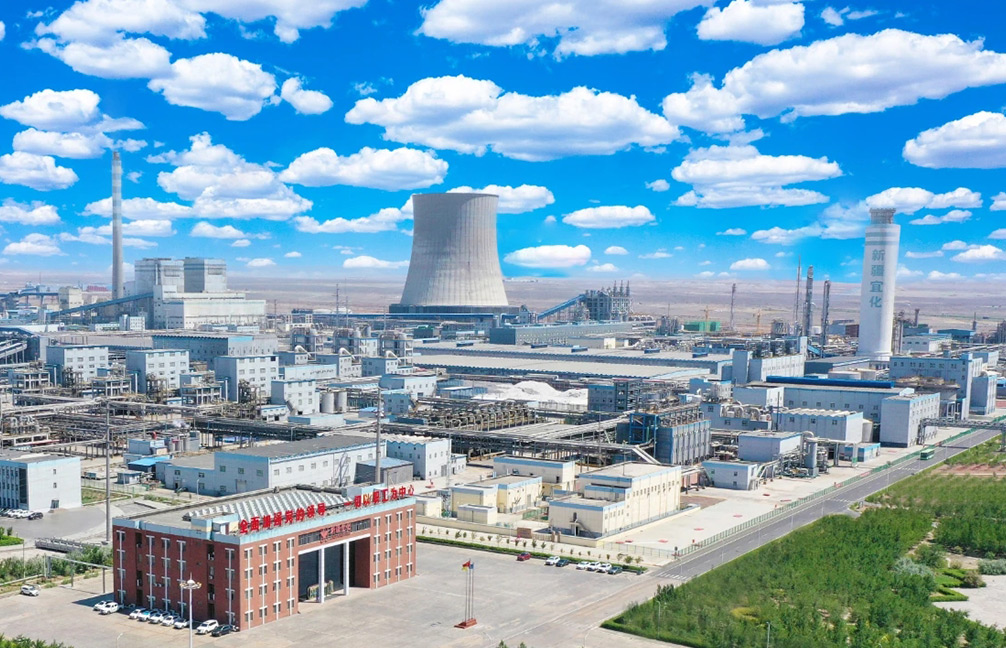


The Xinjiang Wucaiwan project has undergone energy-saving renovations and added low-temperature refrigeration capacity to the original production process's refrigeration system. In the original process, two screw-type chiller units were used for process cooling, which have now been replaced with high-efficiency centrifugal chiller units to meet the process cooling requirements of 7°C water outlet and 12°C water return. Through this "two-for-one" renovation, the system structure has been simplified, and the operating efficiency under partial load has been significantly improved, effectively reducing power consumption and maintenance costs, and ensuring the stability and reliability of process cooling.
In addition, to meet the needs of low-temperature processes, the project has added two new low-temperature chillers to achieve cooling for low-temperature processes. The operational requirements for these two chillers are -6℃ for the cold water side outlet and -10℃ for the return water, while the inlet and outlet temperatures for the cooling water side are 32℃ and 37℃ respectively. Despite the high temperature of the cooling water, the chillers can still stably output chilled water at negative temperatures, demonstrating excellent low-temperature refrigeration capacity and adaptability. They are suitable for specific process scenarios requiring low-temperature cold sources in industries such as chemical and energy.
Overall, after the upgrading of the refrigeration system in the Wucaiwan project in Xinjiang, it has not only achieved an efficient and energy-saving transformation for normal temperature process cooling but also covered the cooling demand at the low temperature range. This has resulted in a multi-temperature zone and highly reliable cold source configuration scheme, fully meeting the operational requirements of the project under the climatic conditions of Xinjiang.