Solution

Solution

Food industry

Centrifugal refrigeration units are key infrastructure in the food and beverage industry, ensuring temperature control for core production processes, achieving full-chain cold chain safety, and reducing operational energy consumption. They directly determine product quality, safety, and production costs.

Current Situation / Pain Point

Process cooling directly determines the flavor and safety of the product

Process cooling directly determines the flavor and safety of the product

The production process of food and beverages requires precise cooling supply, with refrigeration systems running through the entire process from raw material cooling, fermentation/baking to finished product quick-freezing and cold chain warehousing. Traditional refrigeration systems struggle to meet high-end process requirements in terms of cooling rate and temperature stability.

High energy costs and significant seasonal load fluctuations

High energy costs and significant seasonal load fluctuations

Refrigeration energy consumption typically accounts for 30%-50% of the total electricity consumption in food factories. The peak demand for beverage production in summer and quick-frozen food in winter causes significant fluctuations in cooling load throughout the year. Fixed-speed units operate inefficiently at low loads, resulting in substantial electricity waste.

The production pace is fast and the requirements are stringent

The production pace is fast and the requirements are stringent

Food and beverage production is mostly large-scale, continuous, or batch-based, especially during peak seasons when the production line needs to operate 24 hours a day without interruption.

Solution

Through the centrifugal refrigeration unit, precise temperature control and rapid cooling of the core process are ensured, guaranteeing absolute reliability and continuous supply during peak production periods, and achieving optimal energy efficiency operation throughout the year.

Solution
Solution

Specific plan


1. Adopt high-efficiency centrifugal units with large cooling capacity and wide adjustment range

For high-load process links, centrifugal chillers with high cooling capacity per unit and leading COP values are selected as the main cold source. Combined with variable frequency drive technology, the chillers can be efficiently adjusted within a wide range of 10%-100%, accurately matching the dynamic load from low season to high season, achieving on-demand cooling and avoiding energy waste.


2. Integrated intelligent control system

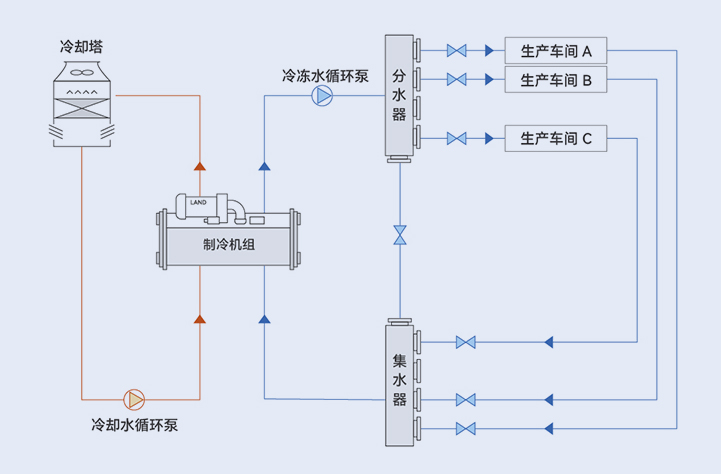
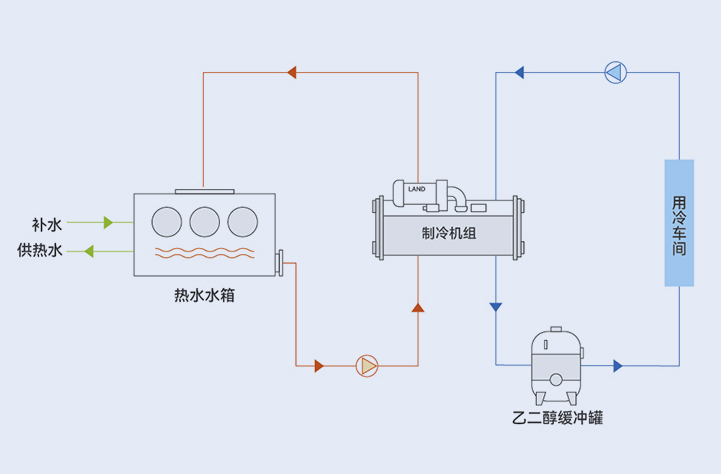
Deeply integrate the centrifugal chiller unit with the Distributed Control System (DCS) or Building Automation System (BAS) of the entire plant. The system can intelligently adjust the number of operating units, operating frequency, and cooling tower fan speed based on production plans, environmental temperature, and real-time load, achieving coordinated optimal operation of the entire cooling water system (including chillers, pumps, and cooling towers) and tapping into the overall energy-saving potential.


3. Operation and maintenance management

Visualize equipment operating status, establish a closed-loop management mechanism for maintenance records, quickly respond to operation and maintenance needs, minimize the probability of unplanned downtime, and ensure continuous operation of the production line.