Solution

Solution

New material

Achieving precise process cooling across multiple temperature zones, ensuring accurate and controllable material synthesis reactions, and enhancing overall energy efficiency directly determine the crystal structure, physicochemical properties, and production economy of core materials.


Current Situation / Pain Point

The process temperature range is wide, and the control accuracy requirements are stringent

The process temperature range is wide, and the control accuracy requirements are stringent

The production of new materials and battery materials involves a large number of process production flows that are highly sensitive to temperature, such as synthesis, purification, and molding, spanning a wide temperature range. Traditional refrigeration systems struggle to meet both the wide temperature range and high precision requirements within the same framework.

Failure to promptly remove the heat of reaction affects product consistency

Failure to promptly remove the heat of reaction affects product consistency

Many synthetic reactions are concentrated and intense in heat release. If the cooling rate is improper or the temperature is uneven, it is highly likely to lead to incomplete crystal transformation of materials, overly wide particle size distribution (PSD), or performance differences between batches, directly affecting the capacity, cycle life, and safety performance of downstream batteries.

High energy consumption cost

High energy consumption cost

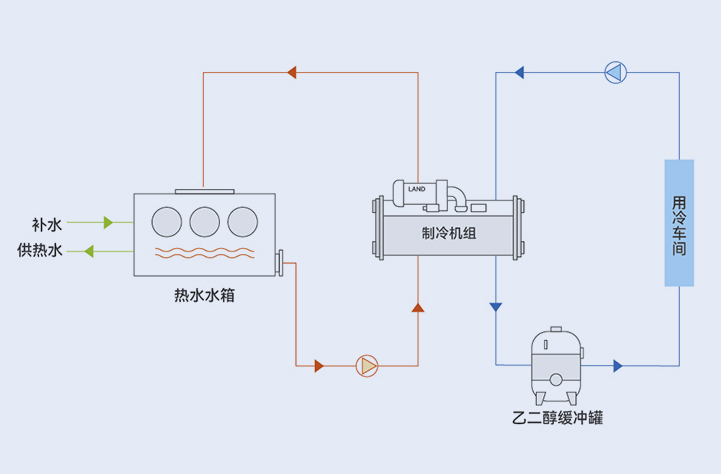
The sintering, drying, and synthesis processes in material production consume a large amount of energy and generate medium and low-temperature waste heat. Meanwhile, the refrigeration station consumes a significant amount of electric energy for refrigeration. The energy system operates in isolation, lacking integration and recovery, resulting in persistently high comprehensive energy consumption. This faces immense pressure amidst industry cost competition and demands for green manufacturing.

Solution

System objective:

Meet the precision process cooling needs of multi-level and wide temperature range, and provide layered, quantifiable, and deeply process-coupled intelligent cooling solutions for the production of new materials and battery materials.

Solution
Solution

Specific plan


1. Characteristic cooling system

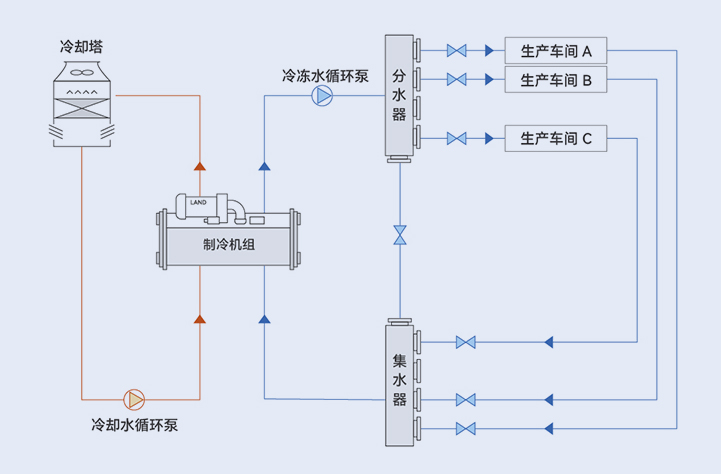
Construct a gradient and modular temperature zone cooling system. For potential acidic or alkaline gases in the production environment, key units can be equipped with enhanced configurations such as corrosion-resistant coated heat exchanger tubes and stainless steel components.


2. Integrated intelligent control system

Deeply integrate the centrifugal chiller unit with the plant-wide Distributed Control System (DCS) or Building Automation System (BAS). The system can intelligently adjust the number of operating units, operating frequency, and cooling tower fan speed based on production plans, environmental temperature, and real-time load, achieving coordinated optimal operation of the entire cooling water system (including chillers, pumps, and cooling towers) and tapping into the overall energy-saving potential.


3. Operation and maintenance management

Visualize equipment operating status, establish a closed-loop management mechanism for maintenance records, respond quickly to operation and maintenance needs, minimize the probability of unplanned downtime, and ensure continuous operation of the production line.